
ARCUS Research
ARCUS Research is a self-funded and short term residency program in summer. The program offers an uninterrupted time and contemplative environment for creative experimentation, in-depth fieldwork, and research for practitioners and professionals in art and other cultural fields, including artists, curators, researchers, university educators, or writers at all stages in their careers.
Located around an hour from Tokyo and a half hour from Tsukuba City, known for hosting one of the largest accumulations of science and technology institutes in the world, ARCUS Research allows participants to come into contact with the contemporary art scene and leading research institutions, as well as devote themselves to their creative endeavors in a calm environment.
- Open call
- October through December (TBD)
- Duration
- One month or two months residency from June to August
ARCUS Research Summer: 1 or 2 months (June—August)
ARCUS Research Winter: 1 month (January—February)
ARCUS Research Short: two weeks (December)
- Number of participants
- Up to 12 participants are selected per year.
- Condition
- ARCUS Project provides a private studio and an accommodation.
The participants are responsible for securing the program fee once accepted.
- Program fee
- One-month residency: JPY270,000
Two-month residency: JPY520,000
(TBD)
ARCUS Research 2026
Summer
The program received 52 applicants from 32 countries and regions. Following a careful screening process, three participants have been selected.
Residency period: May 28– July 31, 2026
Residency period: May 28– June 26, 2026
Residency period: July 2– July 31, 2026
ARCUS Research 2026 Participant
Marine Kaiser
Swiss / France / Belgium
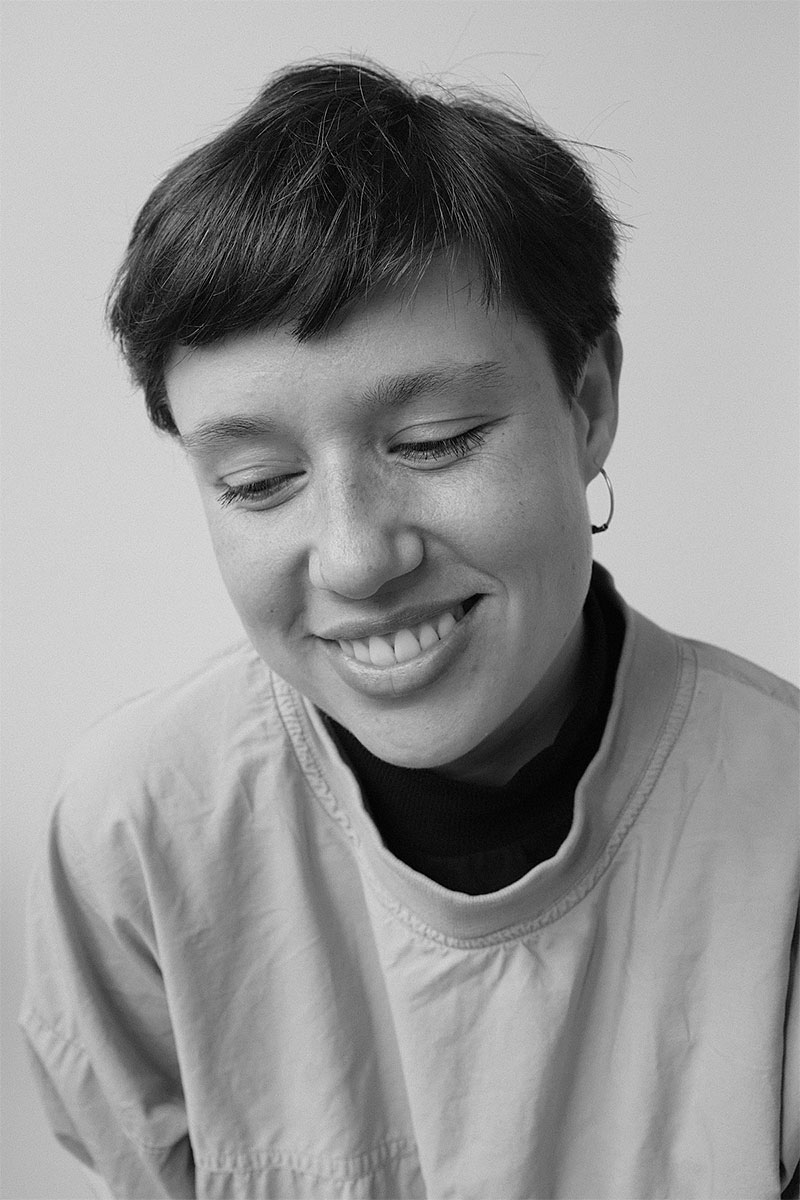
Photo: Nonzuzo Gxekwa
Marine Kaiser (CH / FR, 1992) is an artist based in Brussels. She investigates the roots of our contemporary landscapes through research into the construction of the West and its legacies. Her interventions compose contradictions and complexities by standing at the thresholds of temporary communities. After studying at HEAD Geneva and erg Brussels, she participated in the Jan van Eyck Academie in Maastricht. Recently, her work has been presented at Manifesta 12 Palermo, Pavillon de l’Arsenal Paris, AGB Berlin, Le 18 Marrakesh, and Kanal – Centre Pompidou Brussels. During the ARCUS Research residency, Marine will explore the concept of Shakkei (borrowed scenery) as an opening toward another mode of affiliation with the living world, suggesting possibilities for a synergistic relationship: where what is occupied is to be shared, what is used is returned, what is damaged is repaired; where the passage beyond private property is not operated for picturing nature but where activities become nothing but borrowings.
ARCUS Research 2026 Participant
Iza Koczanowska
Poland
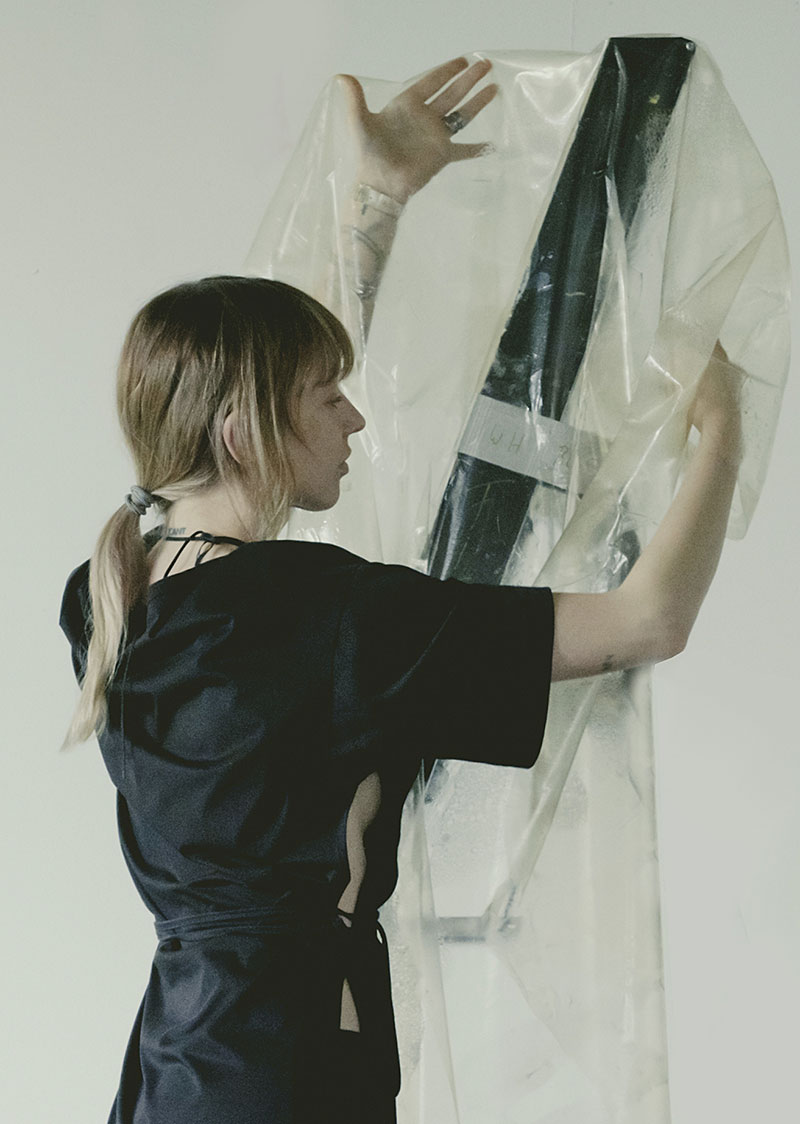
Photo: Öncü H Gültekin
Iza Koczanowska is a Polish artist, researcher, and interior architect whose context- and place- specific practice engages spatial and material research to produce sculptural installations and interventions within space. Through examining sociopolitical dynamics, tourism, and extractivism, she generates speculative, multi-entity realms and agencies. She graduated in Intermedia and Interior Architecture from the Academy of Fine Arts, Krakow, and holds an MA cum laude from the MIARD programme at the Piet Zwart Institute, Rotterdam. She has participated in residencies at M4guestatelier (Amsterdam), Snehta (Athens), and Sesama (Yogyakarta), and her work has been presented at Dutch Design Week, the Nieuwe Instituut, and CSW Łaźnia in Gdańsk. At ARCUS, she will focus on Japanese wellness tourism, exploring care practices in traditional onsen for communal relaxation and connection. Through field research, local biomaterial experiments, and participatory engagement, she will examine social significance and cultural notions of shadow and atmosphere, producing research outputs and photographic documentation.
https://izakoczanowska.com
ARCUS Research 2026 Participant
Augustina Lavickaitė
Lithuania/The Netherlands
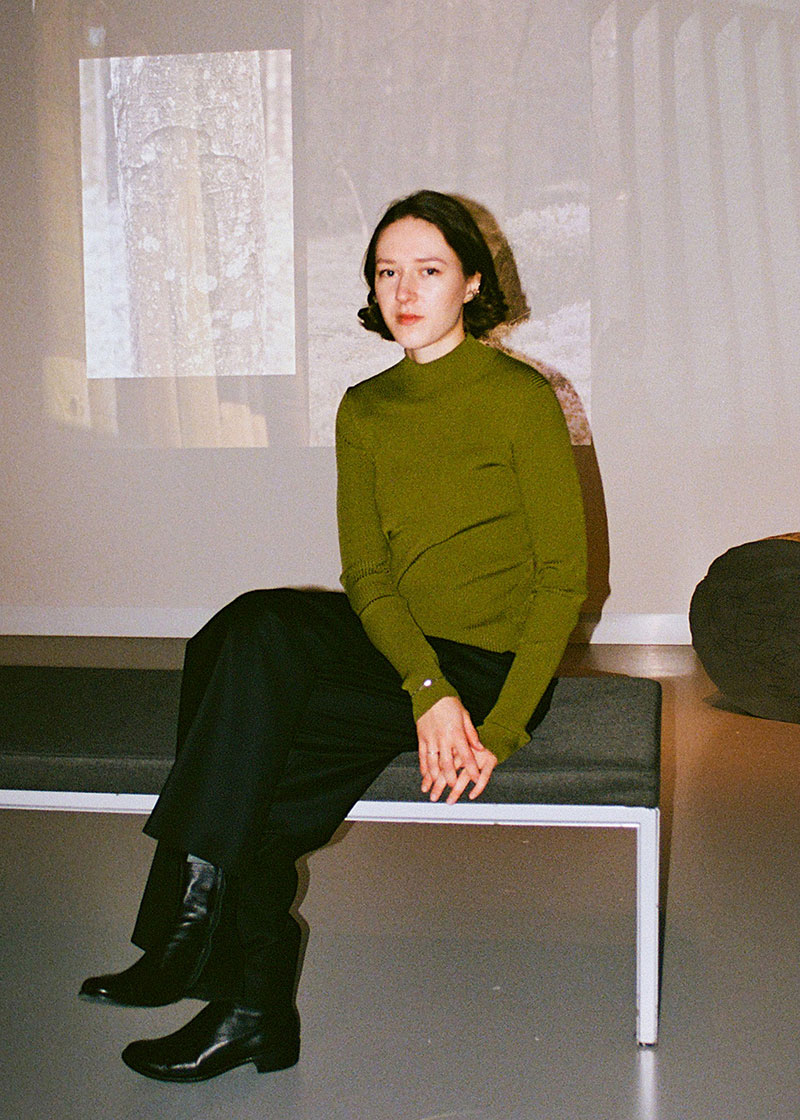
Photo: Micklin Korsuize
Augustina Lavickaitė is a visual researcher using image, sound, and text to explore how witnessing and remembering take shape in objects and landscapes. Augustina’s practice often uses archiving, both as a source of material and as a format: she collects new and found materials and assembles them into narratives. Her work has been presented at Art Rotterdam, Salone del Mobile, Milan, Bundeskunsthalle, Bonn, the Museum of Applied Arts and Design, Vilnius, and Dutch Design Week. In 2024 she received the Young Designer Award from Vilnius Academy of Arts. She collaborates with institutions including Nieuwe Instituut in the Netherlands and is supported by Creative Industries Fund, Nordic Culture Point, and Cultuurfonds. At ARCUS, she will research reading the sky as a cross-cultural practice by comparing historical transcendental interpretation with contemporary geopolitical vigilance, asking how airspace becomes a legible surface for power and control.
https://augustina-lavickaite.com